
Infrastructure
Working Section
Fashion Is The Process Of Discovery
The dress must follow the body of a woman, not the body following the shape of the dress.
-

Spinning
-
.png)
Knitting
-

Cutting
-

Printing
-

Embroidery
-

Sewing
-

Finishing
-

Packing
Spinning
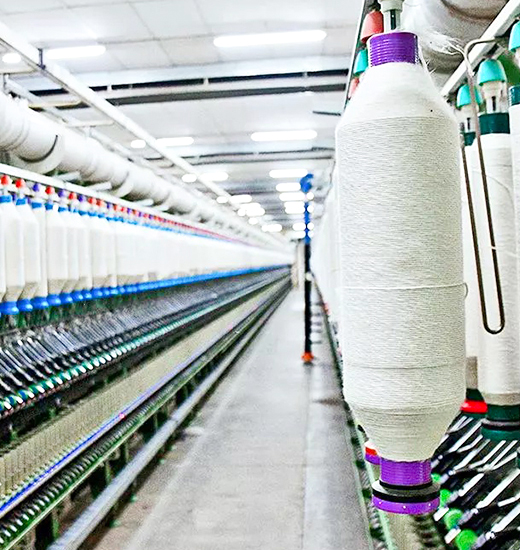
Worsted spun yarns differ from the regular woollen yarn in various properties. Only fibers with long staple length (4 inches or longer) are taken for further processing. The yarns are carded and combed thus making them stronger, finer and smoother. Worsted yarns are used mostly for weaving as it is able to withstand the rigorous weaving process and produce smooth woven fabric. The spinning of worsted spun yarn is carried on through the following process Blending, Carding, Combing, Gilling, Drawing, Roving, Spinning, Winding, Assembly winding, Twisting, Steaming.
Knitting
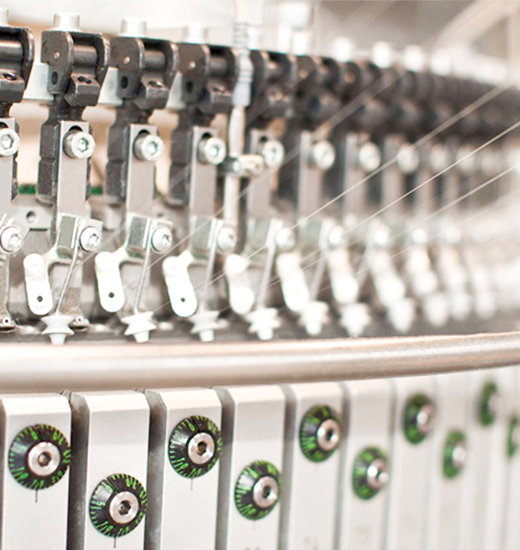
We use the best yarns as well as advanced German Mayer & Cie machines and Taiwan brand Dragon circular knitting machines to produce knitwear in various patterns and textures. Our knitting process basically involves continuously interlinking or knotting series of loops of yarn using needles. These consecutive loops are intermeshed into the previous loop structure. Thus the new stitch secures the loop structure by locking the previous stitches that are suspended from it, eventually creating a sheet of material.
Cutting
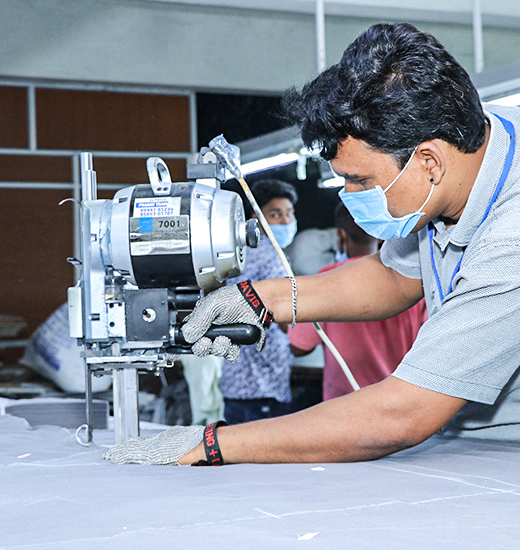
Using the markers made from graded patterns and in accordance with the issue plan, fabrics are cut to prepare garment assembly. This is the major operation of the cutting room, of all of the operations in the cutting room this is the most decisive because once the fabric has been cut, very little can be done to rectify serious mistakes.
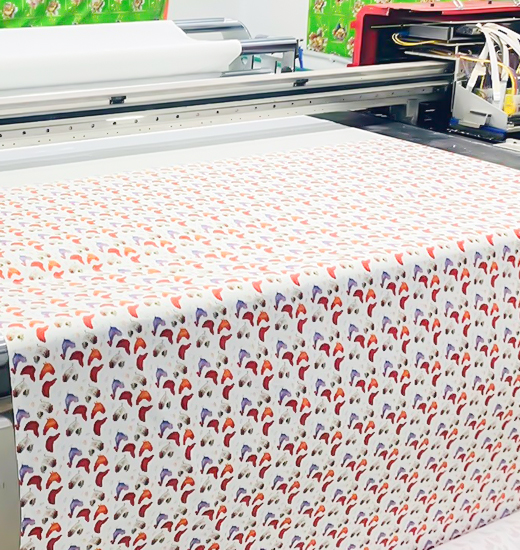
Printing
Meeting the ends of growing customer demand and high market competition, we offer a never-seen-before value addition with our textile printing. The perfection is channeled with an idea to create something new and unique in the market, a masterpiece that is beyond the regular printing process. We are committed to develop, maintain, implement and continuously evolve with the quality management system of global standards.
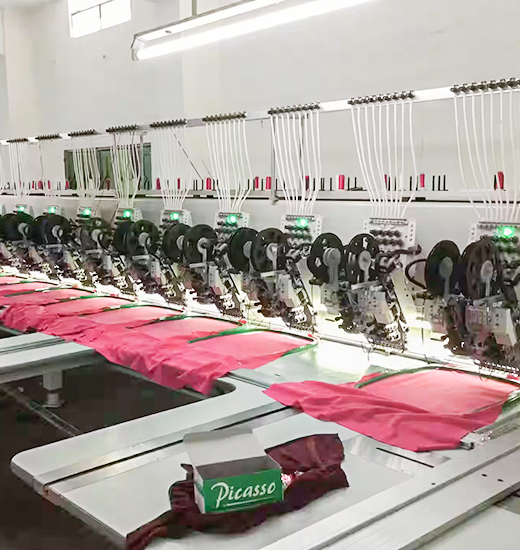
Embroidery
In Stowa Garments, the embroidery process begins when the digitizer company receives the drawing from the buyer and edits it as needed. The Embroidery Supervisor receives the embroidery tape or tape from the Production Supervisor. The machine is set to supply 20-48 embroideries one at a time, depending on the machine's capacity. Agent is responsible for adjusting the machine speed according to the fabric type.
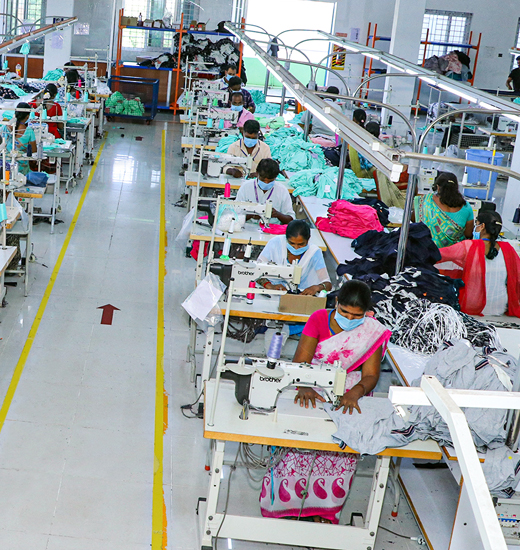
Sewing
Our sewing division is equipped with 250 machines collectively imported from Pegasus, Yamato, Durkopp Adler & Siruba to produce T-shirts, shirts, jackets, undergarments, and trousers.
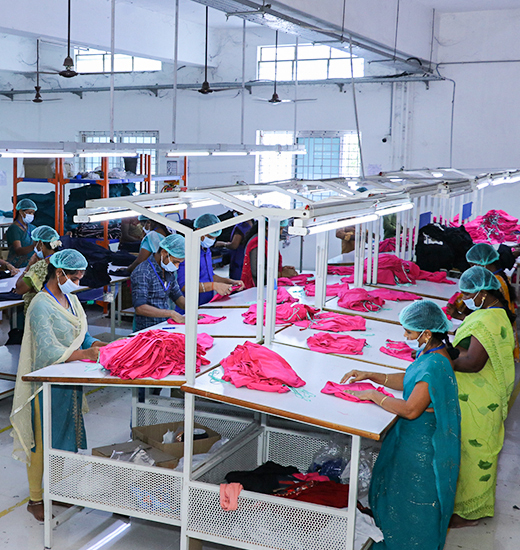
Finishing
The final phase of the production process is of checking, ironing and packaging to ensure that every garment is in line with our customers vision. An in-depth and in house Stowa certified and guaranteed final product inspection is carried out by our experienced quality control teams, keeping in mind high levels of globally accepted AQL standards. This is done in-spite of an end-to- end inspection process at every stage of the manufacturing process, this in turn ensures an error-free and contamination free product. The final products are then run through metal detection machines, before they are finally sealed into carton boxes in our special airport packaging metal free zones and are then ready for shipment.
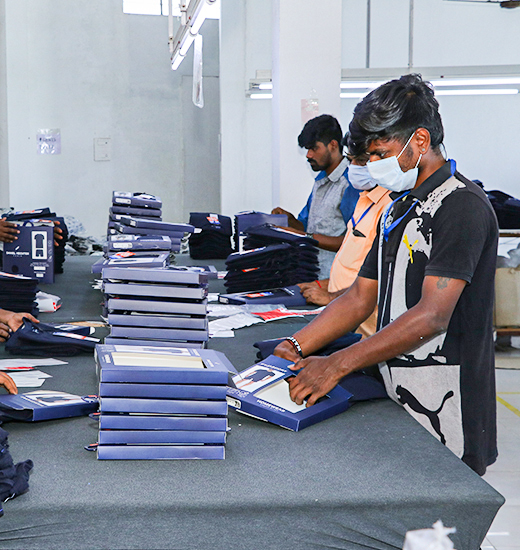
Packing
Packing is the procedure of wrapping, compressing, filling, or creating goods for protection too their appropriate handling. This is the concluding procedure inward the production of Our garments, which prepares the finished trade for delivery to the customer. It is an important part of our process. After completing the entire manufacturing task, wearing clothing is required to live packed. After packing, it is placed inward cartons every bit per instructions too and so it is stored inward a shop subdivision earlier it is delivered to the respective buyer.